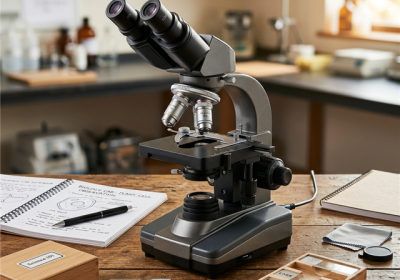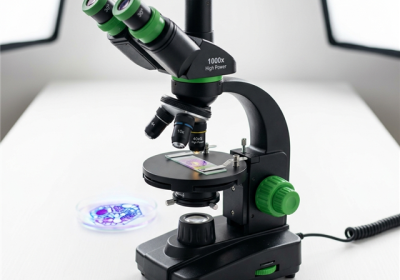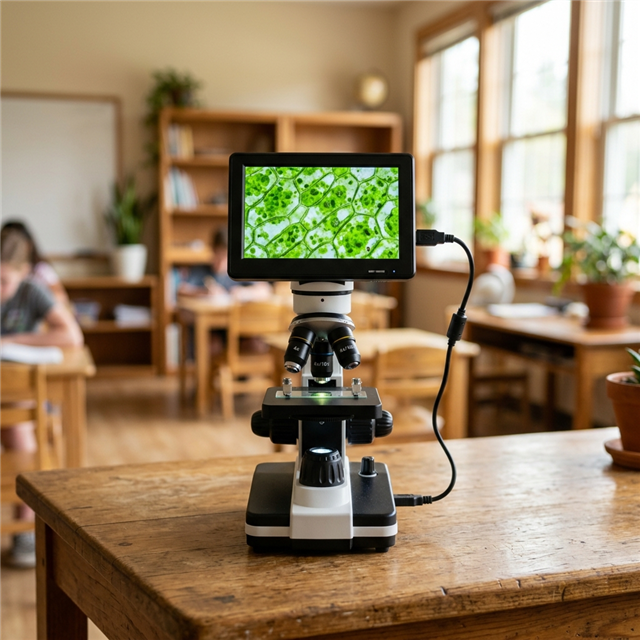

The Fusion Science Digital Microscope is a very popular choice among parents in the UK, often spotted in major retail stores and online as a “premium” entry-level microscope. Retailing between £40 and £60, it promises high magnification and digital ease. But the big question for any parent is: Is it actually worth the money?
In this review, we are breaking down exactly how the Fusion Science Digital Microscope performs in the hands of real kids, what the image quality actually looks like, and whether you should buy it or opt for something else.

What Exactly Is the Fusion Science Microscope?
The Fusion Science model is essentially a hybrid device. It looks very similar to a traditional, heavy compound microscope that you might remember from secondary school science class. However, instead of a standard optical eyepiece where your child has to close one eye and squint, it features a built-in digital screen (or the ability to connect to a screen, depending on the specific model year).
It typically advertises magnifications ranging from 100x up to 400x (and sometimes wildly higher via digital zoom). It comes in a large, exciting box, usually packed with a few blank slides, tweezers, and specimen collection vials.
The Pros: What We Love About It
- The “Real Science” Feel: Because it is constructed like a classic microscope with a stage, heavy base, and objective lenses, kids instantly feel like real scientists when they sit down to use it.
- Included Accessories: It almost always comes as a complete kit. The included tweezers, slides, and collection jars mean you don’t have to buy extra accessories on day one.
- Dual Lighting: Most models feature both top and bottom LED lights. This means you can look at transparent slides (like an onion skin) using the bottom light, or opaque 3D objects (like a coin or a leaf) using the top light.
The Cons: Where It Falls Short
While the Fusion Science kit looks impressive in the box, it does have some drawbacks that parents should be aware of before purchasing.
- Plastic Optics: To keep costs down, the lenses are usually made of plastic rather than precision glass. This limits the true sharpness of the image. At its highest magnification, the image can become quite blurry and frustrating for a child to focus perfectly.
- Build Quality: While it looks like heavy metal, the casing is primarily lightweight plastic. It can easily tip over if a younger child accidentally bumps the table.
- Digital Resolution: The digital camera sensor inside is often an older, lower-resolution chip. While it is perfectly fine for basic exploration, don’t expect stunning 4K crystal-clear images if you export the photos to a large television screen.
Final Verdict: Is It Worth It?
The Fusion Science Digital Microscope is a decent, middle-of-the-road option. It is absolutely worth it if you find it on sale and you are buying it for a careful 7 to 10-year-old who wants the traditional “laboratory” experience of preparing slides and looking at them on a screen.
However, if you are looking for pure optical clarity, or if you have a younger child (ages 4-6) who needs a rugged device they can take out into the garden, there are better, more modern alternatives available online for the same price.
A Highly Recommended Alternative
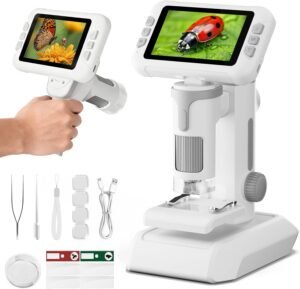
If you love the idea of a built-in screen but want significantly better image quality and modern build construction, we strongly suggest looking at the highly-rated HEWEIMEI Digital Microscope instead. It offers a sharper image, a sturdier base, and a much more intuitive digital interface for children.